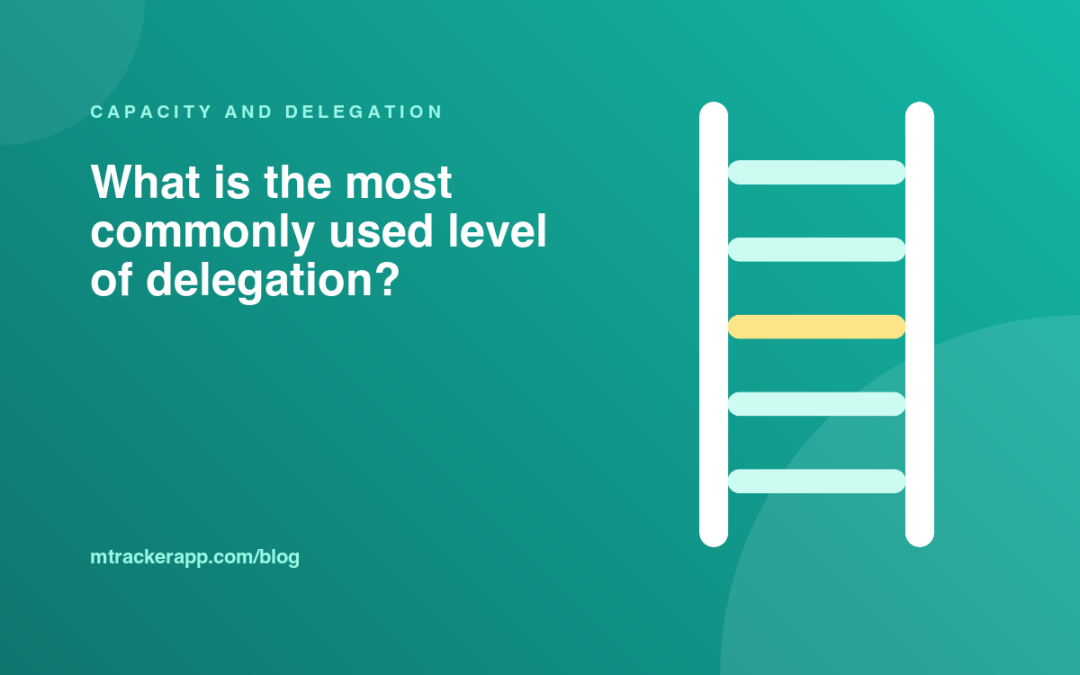
On a five-level scale, most managers delegate at level two or three: look into it and report back, or recommend and I decide. It feels safe because the decision stays with the manager. It also means every task comes back to the manager's desk before it can finish. Most routine work could sit at level four, decide and tell me, once the brief is clear.
The five levels
- Do exactly this. They execute; you decided everything.
- Look into it, report back. You decide with their facts.
- Recommend. You decide from their options.
- Decide, then tell me. They decide; you stay informed.
- Own it. They decide; you hear about results.
Why two and three are the default
They feel like control without the work. The person does the research or the thinking, and the manager keeps the final word. The cost is hidden: every task waits for the manager's attention, the person learns their judgment does not count, and the manager's inbox becomes the team's bottleneck.
Why four is the right default for routine work
At level four the work finishes without a round trip. The manager still knows what happened. The person grows, because deciding is how judgment develops. The risk is handled by the brief, which says what the result must be, and by a review at the end.
How to move up a level
Say it out loud for one task: "This one is yours to decide; tell me what you chose." Review the result against the brief. If it met the brief, the next task is level four too. Most teams can move most work up a level within a month.
Where M-Tracker fits
Level four needs two things: a clear brief, so the person decides toward the right result, and a review at the end, so the manager stays informed without a round trip. M-Tracker holds both. The brief is written and visible. When the work is sent, M-Tracker compares it with the brief and writes a plain review the person sees first. The manager sees finished, checked work. The decision stayed with the person; the information reached the manager.
Try M-Tracker free14-day trial. No credit card. No employee surveillance.
Questions people ask
Is level five realistic?
For experienced people on recurring work, yes. Most tasks do not need it.
When is level one right?
Safety procedures, legal steps, anything where the route itself is the point.
What if a level-four decision goes wrong?
Review it against the brief. If the brief was clear, it is a learning conversation, not a reason to drop back to level two.

Work you can trust, without redoing it.
Your team gets feedback before work reaches you, or your client.
Copyright © 2020 – 2026 M-Tracker. All Rights Reserved. Privacy Policy